Pages

Thursday, July 6, 2017

FILM REVIEW: Caramel


Film Review: Caramel


7.8/10

I'm back! Yep, this blog does films now. This will be the first informally written entry in a series of entries revolving around media picked by my wonderful girlfriend, Brooke (whose reviews I will maybe link at the end of each of mine.) 

Caramel is a Lebanese romantic comedy, directed and starred in by Lebanese director-actress Nadine Labaki (duh, her nationality/profession seems obvious). The film centers around five women and their various romantic/life troubles, using a beauty salon as the central hub for their interactions. These five women each embody an aspect of life as a woman, from aging to chastity. Their stories are each given varying degrees of importance throughout the film, which runs a bit short considering all that it attempts to tackle. 

The most immediately apparent (and applaudable) aspect of the film is the setting. Caramel takes place in a Beirut that is quite different than the one typically portrayed in film. The film largely trades the typical, war-ravaged depiction of middle eastern cities for an idyllic, and happy one. There is no mention of politics or anything of the sort, and the city is shown to be modern and peaceful (albeit a bit hot). The only scene with any sort of violent tension is the one in which Nisrine and Bassam are approached by a heavily armed soldier, but even that turns into one of the film's most humorous moments (and the following scene, where Bassam is reprimanded by the police and his family is absolutely hilarious). The move away from the Western ideal that any city not primarily inhabited by white people is an unhappy, run down disaster is a refreshing and charming touch, and lets the film focus more on the development of its characters rather than their struggles with their surroundings. 

In terms of the film's technical aspects, the range from passable to fantastic, with none of them being in any way bad or unpleasant. While much of the film's charm comes from its amateurism, occasionally the easy nature of the movie can be chalked up more to a lack of polish than to willful informality. On the passable side, we have the acting and the camera work. Director Nadine Labaki has said that she intentionally chose non professional actors for the film, and at times it shows. Occasionally the melodrama can get a bit high, and professional actors could have helped to pull off some of the theatrics, but for the most part the acting does the job good enough, especially during the films more casual moments. It is only during the difficult scenes that the inexperience of some of the acting shows flaws. The camera work also suffers in this way, as many of the shots feel crude or faux-artsy. Combined with the sometimes less than stellar acting, some of the scenes come off as extremely obvious (like the odd scenes meant to depict sexual tension between Rima and her customer) in their intention, so much so that they feel like part of a bad commercial. However, many other parts of the film pick up the slack and then some. The soundtrack is superb, and fits the film like a glove. Many of the songs are used perfectly throughout, either to underscore emotion or just to transition the film from one scene to the next. No matter the use, every bit of sound fits well, at least to my ears. Another point of high praise is the script. The dialogue is sharp and funny, as well as emotional when it needs to be. I don't speak a word of Lebanese (although it does at times seem like an amalgamation of French and Spanish), but the dubs seem to flow well enough that I assume most of the translations are close to literal. 

Developmentally, the film is a bit of a mixed bag, with mostly positives. All of the characters are interesting and have interesting plot lines. There was really no point in which I was disappointed to see the film switching to one particular woman; all five were quite fascinating. My problem, in fact, is the opposite of that. I feel that many of the plot lines were left undeveloped or untapped of potential. The main plot (Layale's pursuit of a married man) was left largely unfinished at the end of the story but was filled with incredible moments, especially those that put Layale in the same room as her man's wife. Also left disappointingly was Jamale's struggle with aging. The only plots that were somewhat satisfyingly resolved were Rima's (and even her plot was extremely underutilized) and Rose's. Rose's plot line ends well, although in quite a bittersweet fashion. I was a huge fan of her shy romance with the American man, and was disappointed to see how it ended (even though I knew she made the right choice in choosing to care for Lili). Despite these gripes, most (I'd say about 78% *wink*) of the stories told are told exceptionally and the characters are all quite likeable. I'd also like to make a quick sidenote about how horribly signposted Rima's homosexuality is in the film. The short hair, masculine clothing, the ever present nerd-chique headphones, come on. The audience is a little more perceptive than that. 

The themes of the film, all centering around everyday life as a woman, are also about 78% superb and 22% underdeveloped. My main gripe with the films themes is how scatterbrained they can feel at times. One scene will attempt to tackle homosexuality, one will attempt mental illness, one will attack aging, one will attack homosexuality, but none of them feel like the offer a full statement on the issue. I obviously understand that femininity is extremely complicated and intersectional, but at the same time, when you only have a 96 minute run time, conciseness is of the essence. A little more focus on fewer issues would have strengthened the film's morals, although the ambition is admirable. 

All in all, there is a lot to like about Caramel, but it is far from a perfect movie. It suffers at times from its amateur background and ambition, but is simultaneously charming and lighthearted because of those same characteristics. I would certainly recommend this movie to anybody with an interest in foreign films, or at the least a person with an open mind who enjoys a good rom com. The film's depiction of Beirut as a normal place where people have every day problems is as admirable as it is entertaining, and the film certainly has a character for every member of its audience to relate with. All in all it is more than worth its short run time, and being on Neflix there is little reason to not see this movie aside from a complete disinterest in its subject matter. 

Saturday, September 10, 2016

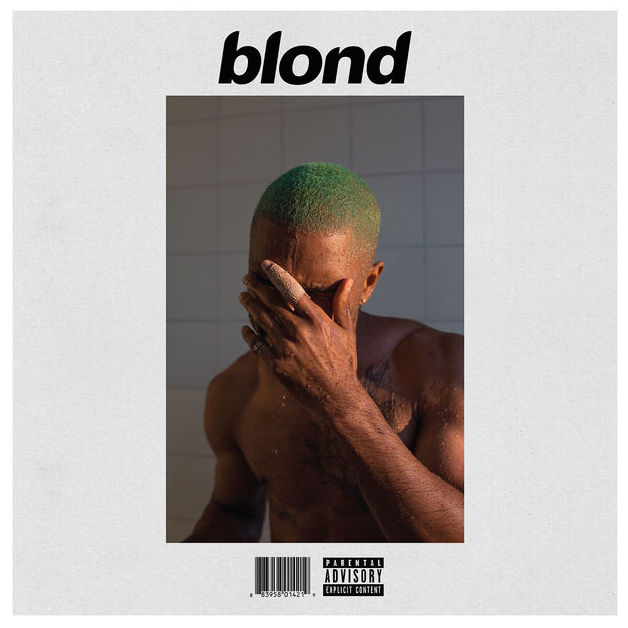
ALBUM REVIEW: Blonde - Frank Ocean


Album Review: Blonde - Frank Ocean


10/10


Moving off to college certainly didn't help with the timing of this review. I've been busy, to say the least. If you're taking the time to read this, thank you for displaying interest in my writing despite its untimely nature. 

Background: That hallowed day has finally arrived. Frank Ocean has emerged from his self imposed reclusion to bless us with another album. If you are new to the Frank Ocean saga, as you would be if you stopped to read this background, then I suggest you read the review I wrote on Ocean's last masterpiece, Channel Orange. That review can be found here. If you are curious as to Ocean's adventures since the release of Channel Orange, I suggest you check out this informative and easy to follow guide, courtesy of the folks at Pitchfork. 

Review: The most immediately shocking feature of this review, dare I make that assumption for my reader, is the score I have given to Blonde, that being a perfect score. Assuming logical reasoning remains unchanged from the last time I browsed its Wikipedia page, that would denote that Blonde is a perfect album. Yet that is far from the truth. Anybody who has sat through the bursts of misery that are the interludes "Be Yourself" and "Facebook Story" can attest to the album's imperfection. On the production side of things, some more drums would have been nice. This listener would have enjoyed a tracklist featuring one or two more upbeat numbers, to serve the same purpose "Monks" and the first half of "Pyramids" served on Channel Orange. Yet these complaints are more "what if?" than "what is." One can only evaluate the work in front of them, and must refrain from wondering what could have been. What is in front of us is a masterpiece of an album that has been seen rarely in modern music, despite its flaws. 

A question that I continually pose myself is whether or not this album is better than Channel Orange. In all honesty I do not know, and that is part of the album's brilliance. With Blonde, Frank Ocean created a work of art that functions as a completely independent album, so different from Channel Orange that it defies comparison to it's predecessor. While it would have been all too easy to create Channel Orange 2, Frank Ocean developed an album that represents a full step forward from his previous works and that is the true reason for the perfect score. Blonde being far from perfect is irrelevant. Take Abbey Road or My Beautiful Dark Twisted Fantasy. Nobody in their right mind wants to listen to "Octopus's Garden" or "Hell of a Life" every time they play the album, not to mention "Because" or "Who Will Survive In America." Yet both of these albums are undisputed 10/10s, especially Abbey Road (which has even more duds than MBDTF), and a large part of that is context, as with Blonde. How could a person not give a 10/10 to The Beatles' "final" masterpiece, the grand culmination of their essence? How could a person not give a 10/10 to Kanye West's comeback album, the album that cemented his place as the most daring entertainer of our time? In final, how could one not give a 10/10 to an album that managed to beat the hype, despite being the most talked about and controversial album of the 2010s, as well as being an improvement upon possibly the best album of that decade? Blonde deserves its perfect score for meeting the public's overwhelmingly high expectations, as well as for being an improvement on an album that was already considered near perfect. 

Sonically, Blonde is a completely different album from anything Frank Ocean has done in the past. This album is far more guitar-heavy than Ocean's previous efforts, and features a far more delicate and ethereal palette than Channel Orange or nostalgia:ultra. I am not yet sure of the extent of Johnny Greenwood's involvement in this album's creation, but after pushing his own band towards a quieter and more atmospheric sound this year, I would not be surprised if the guitarist had a prominent hand in the album's creation. While Channel Orange featured light guitars (usually for the sole purpose of creating melody lines, such as on "Forrest Gump" or "Lost"), the guitar becomes a dominant instrument on Blonde. Tracks like "Ivy" and "Self Control" feature guitars, and few other instruments. Returning from Channel Orange is Ocean's fantastic taste in strings. "Pink + White" maintains  "Bad Religion" and "Pink Matter"s reliance on gorgeous string sections to create soft yet ambitious moods. This album also takes far less influence from classic and neo soul, opting for a more art pop and electronica oriented approach. You can practically hear Bon Iver's influence at multiple points in the album, especially during the outro of "White Ferrari," a gorgeous tune that lifts its melody from an underrated Beatles song. Ocean twists his voice to mimic Justin Vernon's and the results are as heavenly as expected. The lack of overt drums on many songs also contributes to this feeling of dreamy weightlessness, making most songs feel as spontaneous and delicate as a breakaway spiderweb in the wind. A gorgeous display of this is "Solo." This track is mostly rapped rather than sang, and Ocean's flow and lyricism proves that he could easily beat Drake at his own game. Ocean's cadence is led by a lone organ, which syncs to his words in a beautifully descriptive yet abstract chorus, as well as doing this occasionally during the verse. The lack of drums gives Ocean's rapping an experimental edge, as well as conjuring the image of Ocean alone at his piano, singing to himself. When drums do appear in songs, they are usually to great effect. Take for example, the beat switch on highlight "Nights." After a short guitar solo, some crisp hi-hats enter the song as it betrays its previously hedonistic tone for a more vulnerable and affected outro. The opening track "Nikes" features one of the album's more prominent drum lines, a lazy, echoing stomp that gives the songs its swirling feel. As a whole, Blonde opts for a more sparse and minimal sound than any of Frank Ocean's previous material, and it results in a beautifully personal sound. 

Blonde represents a step forward in lyricism for Frank Ocean, which was already previously considered one of his strengths. This is possibly as a result of his rapping, which has gotten infinitely more confident and skilled since his last musical outputs (although Frank has never been a slouch in that department). Songs like "Solo" and "Skyline To" feature gorgeous imagery, such as descriptions of constellations, lights, and driving, as well as some of Frank's off-kilter rapping. Lyrically, the album discusses many of the same themes as Channel Orange, such as drug use, sex(uality), love, and religion. Many times Frank Ocean will use the instrumentation to lend weight to his lyrics, such as when the words and organ play in unison on "Solo." I refuse to believe it is coincidental that one of the most religiously themed songs on the album ("Godspeed") is backed by keys straight from a church and chopped gospel backing vocals, while Ocean sings of prayers, god, and glory and religious imagery runs amok. Another lyrical highlight of the album is "Ivy," my personal favorite from the album. This song reflects on mistakes made in love, as well as the feeling of youth. The chorus opens with the line "I thought that I was dreamin' when you said you loved me, " a line that hits with such clarity and poignancy that it is the highlight of this song. By the end of the chorus the relationship has faded, which only helps to increase the line's potency. In this case, the love was a dream. The rest of the song sees Frank reminiscing on his experiences with the OF crew, and missing just being able to hang out with his friends. The song has a dream like quality until a shrieking voice rips the song back to reality, followed by the sound of objects being broken. Ocean's strength has always been his ability to paint a scene and fill it with emotion, and this ability has only gotten stronger with time. 

In all, Blonde represents a forward movement for Frank Ocean in nearly all aspects. This album is more experimental, coherent, personal, and lyrical than Channel Orange, which could often feel like a mash-up of styles and ideas at times. Blonde also has an inherently contradictory nature, and in more ways than just its title. The album is not without its flaws, yet its peaks are high enough to make the listener forget any transgressions. There is not much to be said about the album that does not reveal itself by listening, yet some of it's most important points only come through deep listening. In short, just go listen to it. There is simply no reason to not at least try the album, whether or not you are a fan of Ocean's previous work. There is little crossover between Blonde and anything Frank has previously recorded, save a few similarities thematically. This is an album to be cherished by the listening public, at least until Ocean decides to bless us again with another project. 


HIGHPOINTS: "Nikes" "Ivy" "Pink + White" "Solo" "Skyline To" "Nights" "White Ferrari" "Seigfried" "Godspeed" "Futura Free" 

LOWPOINTS: "Be Yourself" "Facebook Story" "Pretty Sweet" 

RECOMMENDED ALBUMS: Channel Orange - Frank Ocean, Pet Sounds - The Beach Boys, Revolver - The Beatles, A Moon Shaped Pool - Radiohead

Monday, August 22, 2016

ALBUM REVIEW: Light Upon the Lake - Whitney

Album Review: Light Upon the Lake - Whitney


9.1/10

Background: Once upon a time (that time being 2007-2014) there was a band by the name of Smith Westerns. This group of kids (the quintet was high school aged when they released their debut album) made a solid, slap shaped smack in the swimming pool that is indie rock with three excellent glam-rock inspired albums before announcing an indefinite hiatus and, eventually, their break up. It all seemed to be over in the blink of an eye, but to burn out seemed logical for a band such as Smith Westerns. In the aftermath, frontman Cullen Omori began a solo career of little note, while members Max Kakacek and Julian Ehrlich went on to become the drummer/lead vocalist and guitar player of a new band named Whitney. While Smith Westerns explored the work of 70s glam rock heavy hitters such as early David Bowie and Marc Bolan, Whitney takes a different approach to the era. Whitney's music finds its roots in the music of The Band, Creedence Clearwater Revival, and Allen Toussaint. This album also takes heavy influence from the delicate, ethereal nature of Chicago soul with its use of bold yet gentle horns and the vocal/melodic stylings of Ehrlich's vocals. 

Review: Many reviewers are praising this album on account of its subtlety, and how it encourages a listener to take pleasure in the small details of each song. While this is indeed a LP filled with hidden pleasures, especially in regards to Kakacek's beautiful yet intricate lead guitar lines, but this is also an album of great immediacy. Take, for example, the standout track "Golden Days." This remarkable track ends with an anything-but-subtle climax filled with slide guitars, acoustic guitars, electric guitars, horns, tambourines, piano, deep bass, and a "na-na-na" outro. It is truly impressive to behold the amount of instrumentation happening at once here, and it makes for one of the albums most transcendent and immediately enjoyable moments. The rest of the song is a devastating tale of a relationship past its peak. The lyrics in the chorus are particularly potent, with Ehrlich singing "It’s a shame I can’t get it together now/It’s a shame we can’t get it together now" over an especially soul crushing chord change. This makes for an especially emotional (and catchy) chorus on an album full of them. Playing foil to "Golden Days" and its dreary, tired sulking is the bright and vibrant "No Matter Where We Go." This song is just as immediate as "Golden Days" yet takes a different approach to love. "No Matter Where We Go" is about being in love, and the joy that comes with it. The instrumentation is sunny and sharp, as well as the lyrics. The chorus "I can take you out/I wanna drive around/With you with the windows down/And we can run all night" reads slightly juvenile on paper, but certainly does not come off that way in the context of the song. This is a nearly universal sentiment, wanting to drive and escape with the one you love, and is captured brilliantly (and again, catchily) by the band through their lyrics and their performance. 

Yet, there is a reason for all this talk about subtlety. Take, for example, the albums quieter numbers like "On My Own", the title track, and the album's opener "No Woman." These tracks largely lack the bombastic nature of songs like "Golden Days" or "No Matter Where We Go" yet are equally enjoyable as the album's flashier moments ("On My Own" is my personal favorite on the LP). Largely to thank for this is Kakacek's beautiful guitar work (the learning of which by ear has been the bane of my existence for the past few weeks. It can't be too much to ask for a guitarist more skilled than myself to cover or tab out a few of these songs). I have used the word "beautiful" twice now to describe the same guitar playing, but no better word comes to mind. Kakacek's playing is both highly melodic and complicated, but never advanced to the point where technical skill begins to overpower good musical sense. All three of these songs highlight his ability to create memorable lead guitar lines that contribute to the song as a whole, stand alone as individual melodic and developed pieces, and allow Kakacek to flex some guitar skills without compromising the integrity of the band's unity. Other subtle joys on these songs include the arpeggiated opening piano to "No Woman," which to me sounds similar in both tone and melody to the one that plays throughout "Mr. Sandman" by The Chordettes, the moment when the rest of the band kicks in during "On My Own" and the little fingerpicked riff/refrain that plays after each line in "Light Upon The Lake," where Kakacek deftly alternates between fingerpicked individual notes and small chord shapes to create a neat little guitar melody. 

The last three tracks I'd like to discuss, "Polly" "Dave's Song" and "Follow," are three of the album's strongest, but are also three tracks where the band's work in Smith Westerns becomes more apparent. "Dave's Song" in particular features a slowed down post-chorus with piercing slide guitars that sounds reminiscent of one of Smith Western's crowning achievements: the song "Still New." There are actually a few similarities between "Dave's Song" and "Still New," such as the way the lyrical melody follows the instrumentation during the verses, as well as both song's somber moods. Yet rather than sounding like the best B-side Mott the Hoople never released, as is the case with "Still New," "Dave's Song" sounds perhaps like the best B-side The Band never released. This unconscious (or maybe intentional???) updating of ideas explored with Smith Westerns makes for some of the album's best songs. The two other songs, "Polly" and "Follow" are also standouts, especially "Polly." This horn led track makes for one of the album's highlights, and really lets horn player Will Miller shine. This song's delicate keyboards, tragic lyrics, and beautiful chord changes are also incredible, but this is a constant across all the songs here. "Polly" is potentially the best song on this record, as it features the heavy emotions of "Golden Days" as well as the subtlety of "On My Own." 

Now for the unpleasant paragraph. I "only" gave this album a 9.1, so what is responsible for the .9? The short answer is innovation. While these songs are by far the most well constructed and well played tracks we will hear this year, they are simply that. They bring nearly nothing to the table that has not been done before. The right way to put it might be that the boys in Whitney wear their influences a little too proudly on their sleeves at times. While there is nothing wrong with this, it doesn't make for a 10/10 album to revive and re do other people's ideas, even if you revive and re do them in a staggeringly well done way and even if those ideas are some of the most underappreciated in the history of modern music. In the future, the band might consider taking from a more diverse set of music cues in order to drive up their innovation. In my head, I can see their next album incorporating influences such as 50s pop, funk, hard rock, southern rock, disco, and even jazz with ease, all of which could make for some unique and inventive songs. One thing that certainly does not drive down the score for me is Ehrlich's voice, something which nearly every reviewer has commented on before me. While yes, Ehrlich's voice is not perfect and it can be slightly off-putting to some, it is not in any way a downside to the album. Ehrlich's falsetto perfectly straddles a line between femininity and masculinity, between skill and a passionate amateur, and between heartbreak and joy. While it might take some a few songs to adjust to its pitch, it is certainly not a reason to discredit the band and it is certainly not a downside to a nearly perfect album, and Ehrlich's singing (especially live) will only continue to improve. 

In all, Whitney destroyed my expectations with this album. Their initial singles showed a mountain of potential, but the album that followed completely blew past that bar. It is rare for a band to reach a level such as this on their first project, and Whitney has done it in a way that feels effortless. Unlike many other one album wonders, it does not feel like Whitney has captured lightning in a bottle here. It does not feel like Whitney had an out of body experience when creating this work of art, leading them to never be able to reach heights such as this again. I am confident that this band will be able to improve on their next album, and will be around for many albums in the future. Until then, we just have to keep playing Light Upon the Lake as we watch another summer fade into fall, and wait for the day that Dylan Ehrlich and co. decide to bless us with another album. 

HIGHPOINTS: "No Woman" "Golden Days" "Dave's Song" "Light Upon the Lake" "No Matter Where We Go" "On My Own" "Polly" "Follow" 

LOWPOINTS: "Red Moon" (feels largely unnecessary)

RECOMMENDED ALBUMS: The Band - The Band, Yankee Hotel Foxtrot - Wilco, Cosmo's Factory - Creedence Clearwater Revival, Sweetheart of the Rodeo - The Byrds

Friday, June 3, 2016

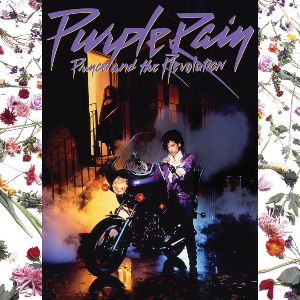
CLASSIC REVIEW: Purple Rain - Prince

Classic Review: Purple Rain - Prince


CLASSIC/10

Background: To call Prince a cultural icon would be selling the man short to an immense degree. Prince is a name that needs no introduction, needs no explaining. There are no other Princes, there is nobody who might come to mind when the word Prince is mentioned in the context of music. Much like saying MJ, or McCartney, or Bono, Prince is a single word that means a single thing: it is the first name of Prince Rogers Nelson, a little man born in Minneapolis, Minnesota to two musician parents. Over the course of Prince's career, which spanned decades, he released 39 studio albums, 13 EPs, and 104 singles. He has sold over 100 million records, and this particular record has sold over 22 million copies. Purple Rain is regarded as Prince's greatest and most impactful work, and that is saying something considering the man revolutionized cultural perceptions of sexuality, gender identity, and race through his music. This is his first album with the backing band The Revolution. On Prince's previous 5 albums he played every or nearly every instrument, and is credited for having played 27 different instruments on his debut album. Recently, and heartbreakingly, Prince passed away. With his death, we have lost one of the hardest working and most naturally talented musicians to have ever lived, as well as one of the most compelling celebrities to have reached fame in modern society. 

Review: Purple Rain is undoubtedly a pop album at its core; nobody would argue that. However, in its accessory sounds, Purple Rain takes a much wider range of influences, ranging from funk to R&B to even heavy metal in the Funkadelic-inspired guitar theatrics (Prince was a virtuoso, of course). Prince's greatest musical attribute was the way in which he was able to synthesize a variety of influences into something that defied traditional genre labels. There are easily ten different genres that this album could be filed under, and each are accurate. Prince, being the musical polyglot that he was, could take influences like Van Halen, James Brown, and Bob Seger and fuse them into a brilliant single work that was distinctly Prince-esque rather than just a slapdash collection of influences.

Much of this album, much like the decade that it helped define, borders on campy or even cheesy. Take, for example, the album's opener "Let's Go Crazy." The track opens with what might be the the most over-the-top, yet guiltily enjoyable, monologue in all of music. It is completely melodramatic, but keep in mind this album was released in a decade where this music video was the biggest in the world for a while. After the painfully 80s monologue, some synthesized drums and over the top metal guitars kick in. The track takes off and Prince does his thing, yelping and singing over the remarkably dance-y and fun instrumental. A synth lead, straight out of a carnival, soon plays. By this time a dozen instruments are furiously playing, a cacophony of brilliant sounds that is almost jazz-like or psychedelic due to the multitude of sounds present at once. This track is structured similarly to many others on the album. Lots of bright, and shrill sounds dominate this album, giving it a sense of overwhelming optimism. To many, this might be a major turn off, especially mixed with Prince's already flamboyant image. Yet, in equal measures this is one of the most intriguing aspects of Purple Rain. There is something incredibly infectious about the energy of this record, something undeniably fun in Prince's glorious excess. To let oneself go and just accept the record's nature is the way to allow oneself to experience it best. 

The album then switches into "Take Me With U" which sounds like an updated version of Prince's earlier work. There is a strong disco and dance influence on this string led track, but slowed down to a syrupy tempo. The four-on-the-floor excitement of disco is absent here and is replaced by a strong and passionate string-led groove. The simplicity of the lyrics and melody, however, are classic early Prince. Also worth noting is that this is a duet, with the female voice being sung by Apollonia. She is largely unnecessary, but a female voice is a nice touch. Many find this to be one of the records weaker tracks, but despite that it is filled to the brim with creative ideas, strange influences, and infectious energy. 

"The Beautiful Ones" is a gorgeous synth pop ballad, easily a highlight on this amazing album. Prince's heavenly falsetto has rarely sounded more breathy and alluring that it does on this track, as he sighs "Don't make me waste my time / Don't make me lose my mind, baby" over the track's electronic instrumental. The song builds to a climax by its end, with huge strings and metal guitars building into the song as Prince takes his already emotive vocals to a new level. Prince explodes into a fit of shrieking and screaming, and then the track dies down again. The song smoothly transitions into "Computer Blue" which is another more upbeat number. The highlight of this song's first half  is Prince's catchy and excited vocals, as the beat and instrumental sound tame in comparison with the chaos of "Let's Go Crazy" and the explosive "The Beautiful Ones." Yet there is more than enough going on in the instrumental, especially once the beat switches half way through the song. The song transitions into a much more simplistic, guitar driven instrumental that is both an interesting direction to move the song into, as well as a nice break from Prince himself, who can get slightly overwhelming at times. 

The end of "Computer Blue" fades perfectly into another highlight, "Darling Nikki." This song is the closest thing the album has to a "heavy" song, and the instrumental is intentionally mixed in order to give it a raw, live feel. The lyrics tell a humorous (and dirty) story of one particularly memorable sexual escapade. This song is actually largely responsible for the obnoxious parental advisory sticker now placed on explicit albums, after Tipper Gore walked in on her 11 year old daughter enjoying the works of Prince, particularly this song. The song is fairly tame compared to music nowadays, and even compared to Prince's earlier work, yet for whatever reason this song is the straw that broke the camel's back. Anyway. This song operates at three different tempos, and features a strong use of quiet/loud dynamics. It is placed brilliantly in the track list, as it is followed by another highlight: the bassless "When Doves Cry." This song was one of the album's biggest hits. It features some fairly personal and autobiographical lyrics and a highly experimental beat. The song features no bassline, which is highly unique among 80s dance tracks. Every instrument was played by Prince on this song, making it one of the few on Purple Rain that was recorded in this way. 

The next two tracks seem to function as one, in my mind. "I Would Die 4 U" and "Baby I'm A Star" are both highly impassioned dance tracks, although the former is a bit slower than the latter. "I Would Die 4 U" is a bit of a weak spot on the album, as it's vocal melody is the track's only highlight. The beat is fairly minimal and forgettable. "Baby I'm A Star" features an uptempo, driving dance beat as Prince sings his own praises in the vocals. This track features Prince at his most confident, yet not his most bombastic. This song could also be seen as a bit of a partner to "Let's Go Crazy," as both songs go, well, crazy. 

The final track is the most monumental, bombastic, brilliant, and wonderful moment of the album. The nearly nine minute title track is easily the highlight of the album, and possibly of Prince's career. This song is a fusion of R&B, gospel, hard rock, and features a beautiful string section. This ballad is written in the style of many of the other power ballads of the 80s, but separates itself with the sheer grandeur of itself. Prince also shows off a bit of his vocal range here, with his voice spanning from F3 at its lowest to A5 at its highest. Now, I can't hear that on my own (my sense of pitch is not that good), but I do understand what it means. That's impressive, trust me. Perhaps the best way to understand this song is to watch Prince play it at the Super Bowl, in the pouring rain. The purple stage lights combine with the rain for a truly incredible performance that needs to be watched, rather than described. All in all, this track is the perfect summary of that album with which it shares its title. Does this track need to be nine minutes long? Absolutely not. Does it need to be this dramatic? Absolutely not. Is it better off for both? Absolutely. 

Prince's influence can still be found in modern music. Scores of artists, too many to name, would not exist without Prince's influence. Modern music is also still attempting to find a successor to Prince's legacy. Certainly one of the best at continuing Prince's style of music is Alan Palomo, aka Neon Indian. He plays a style of dance music similar to that of Prince's, and leads that charge in the revival of 80s stye synth pop/nu disco. Yet Palomo lacks Prince's immense popularity, as well as his groundbreaking innovation. In terms of social standings, rapper Young Thug has been making waves in the public eye for breaking gender norms in a genre that is notoriously hypermasculine, as well as for experimenting and bending genres in his music, both of which have earned him a decent amount of Prince comparisons. Unfortunately, Young Thug lacks Prince's popularity as well, in addition to his consistency of output and is usually compared to Prince in an ironic sense. Prince's musical perfectionism is certainly alive in the consistent flawless works of Kanye West and Kendrick Lamar, as well as in West's eccentricity. This difficulty in finding a comparison is truly a testament to Prince himself; there was only one Prince, and there will only every be one Prince. 

HIGHPOINTS: "Let's Go Crazy" "The Beautiful Ones" "Darling Nikki" "Baby I'm A Star" 

LOWPOINTS: "Computer Blue" 

RECOMMENDED ALBUMS:  Voodoo - D'Angelo; Off The Wall - Michael Jackson; Multi Love - Unknown Mortal Orchestra; Vega Intl. Night School - Neon Indian

Wednesday, March 16, 2016

Blog Post #6a: The Finale (Not Really)

Conclusion
This will be the final graded blog post for my 20% project. I specify the "graded" portion because at the moment I fully intend to continue writing these reviews for future albums. I suppose that since this is the final post and I have not been following any sort of rubric for my posts this year so far, I should at least make an attempt to answer the questions required to be addressed by this post. The first question asked of me asks me (that's a tongue twister) to describe the final outcome of my project in terms of success/failure. I like that. Either the blog is a success or a failure. No grey area. Just how American youth-age sports should be, but aren't. Back on to the topic, I consider my blog to be a success. I met all of the goals that I set in my introduction, got more than a few people to try some music that they would have never listened to (for better or for worse), and I got a lot of good writing practice. As far as the final outcome of my project, I direct you towards the previous twenty-two posts. First off, that will give you a chance to re-read the greatness (failure?) of my reviews. Secondly, that will give you a chance to generate your own impression of my project. In terms of why I was able to succeed, I can honestly answer that the reason is mostly because I care. I enjoy writing and I love music, thus I was willing to put the time and effort into writing these reviews. Each review took well over two hours to write and hyperlink, and if I did not care about what I was doing it would not be worth the effort. I was spending at least eight hours each blog cycle on my reviews and I do not feel arrogant in saying that my hard work shows. These reviews are decently written, informative, lengthy, somewhat entertaining, and organized. If I write something with all of those qualifiers and spend anywhere from eight to ten hours each cycle working on it, you better believe I will consider it a success and the reason for that is not exactly hard to determine. 

Personally, this project was beneficial to me. The actual act of sitting and writing for hours on end has helped me greatly in my essay driven classes. Sitting and analyzing music the higher degree necessary to write the reviews has also helped me to develop my listening techniques as well. On a more cynical level, this project has also taught me one major lesson; nobody else cares as much about your passion as you do. Not just with my project, but with others as well, it is obvious that nobody really, truly cares about what you do. On one hand, that is a great, great thing. That means everybody has their own unique set of interests and hobbies. On the other hand, it certainly is annoying to see thoughtless, generic comments from people who I know did not actually read the blog post and are just filling out a comment format in order to get points. In the case of my blog posts, this is understandable. I write a lot and I do not expect everybody to be interested in my weird music. But on other, more accessible blogs this habit is a little saddening. Luckily, I don't work hard for other people. I work hard at these reviews because I enjoy it (and because I love seeing that sweet 14/12 get entered into my grade book and drag my plummeting Honors Anatomy grade into an acceptable range). Luckily, these reviews have gotten enough legitimate views and I have been sent positive feedback over text due to my sending them to my friends and Mr. Man's much appreciated in-class shout-outs. 

For part d. of the rubric, I will be writing my response in a question/answer format. I hope that is ok, because that is how I will be doing it. A few questions I have asked myself, as well as their answers: 

Q: Should I continue this after the "final blog post?" 
A: I should. These reviews are great practice for writing, they allow me to express my opinions, they have been talked about by my peers, they take up some of my downtime, and I enjoy it. With my Channel Orange and Drive North review, I posted links to both on my Twitter. That night I got 132 views on my blog, proving that if I were to continue these reviews they would still get views and exist as more than just a musical diary for myself. 

Q: Should I review other forms of media? 
A: I should. I wrote a series of film reviews (think: my music reviews but more formal) for an out-of-school elective that are arguably even better than my music reviews. I do not know nearly as much about film, art, video games (yes, video games are art and the public perception that they are not is insulting to the thousands of hours of hard work it takes to make a large budget game, as well as ignoring some of the most incredible pieces of entertainment created in the modern era), and literature as I do about music, but I could make it work. 

Q: Can I make money from this? 
A: Probably, but not much. Freelance writing for major music publications is quite competitive and pays terribly, but I feel that when I really try I can write nearly as well as anybody being published on most of the major review sites and I am not even out of high school. On top of that, if my blog becomes popular enough, I will be able to sell ad space along the sides of the page for some very minimal monetary compensation. I will never make a living off my writing, but if I can somehow manage to bring in a few dollars each month from it I will be more than happy. 

Q: Do people care? Are people still reading this post? 
A: No and no. 

If I were to take this class for another semester, I am not entirely sure what I would do to improve. I would certainly give myself an easier to achieve goal. Many Friday nights I found myself writing blog posts on my phone during halftime at basketball games instead of talking with my friends or at dinner with my girlfriend (sorry about that, I hope you make it this far into the review when I send you the link later and that you see this). I would also allow myself to be a bit more lenient with my hyperlinks, as those took quite a bit of time and I know nobody was clicking them. 

End of Blog Post 6a and the first stage of my blogging experience. 

Sunday, March 13, 2016

Post 5c: CONTEMPORARY REVIEW: Drive North - SWMRS


Contemporary Review: Drive North - SWMRS


8.6/10, Listen Immediately

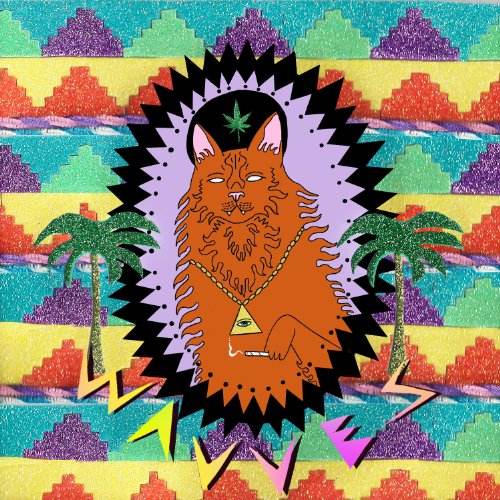
Background: SWMRS are a California punk/grunge/pop band that have been gaining popularity in the indie and punk scene for a while now. They have released a half dozen or so projects under a variety of aliases and this is their first project under the name of SWMRS. As painfully un-cool as possible, a large portion of their initial success can be owed to drummer Joey Armstrong's father, Green Day frontman Billie Joe Armstrong. Armstrong produced nearly all of the band's early work, and as not-punk as it is to say that daddy produced your first few records, you can't blame them for utilizing a connection to one of modern punk's biggest icons. While still discussing influences, it is important to mention the bands that are responsible for SWMRS. One influence is certainly Green Day, but also, to my ears, The Ramones. Frontman Cole Becker's vocals sound like a squealing, teenage impression of Joey Ramone's voice and the group's integration of beach music/50s girl group style melodies feels very similar to the bubblegum influences The Ramones melded into their sound. Other major influences include the surf punk band and touring partners Wavves (whose breakout album's cover is currently my lock screen), the hardcore/surf punk band FIDLAR (this record is produced by singer Zac Carper) and as with any punk band since the grunge era, Nirvana. 

Review: This is an album obviously designed to be a breakout for SWMRS. It features their first obviously made for radio track, "Figuring It Out," and while it is not one of my favorite tracks, it is certainly a solid radio song. The production is less lo-fi than in the past, and the songs are designed for maximum energy delivered with maximum hooks in as short of a time as possible. A much better piece of pop than the cheesy "Figuring It Out" is the sunny "Turn Up." This brilliant little slice of California sunshine is sung by lead guitarist Max Becker. While the "other" Becker certainly does not have the strangled voice of his brother, he does have an incredibly simple way with melody. This song is incredibly infectious, with an easy to follow melody and a pleasant tone. The song also features a neat production trick in the beginning, with the song beginning as barely a whisper and then building in volume until hitting the first chorus, where it then hits full loudness. There is nothing about this song that doesn't inspire foot tapping, grinning, sing-a-long happiness. 

Many of these songs have been part of the band's live catalogue for months before the release of the album. When I caught the band opening for Wavves (with Twin Peaks) in LA, their superb show included nearly every song from this album. Many of these songs have also been featured on previous, smaller SWMRS releases, albeit in slightly different forms. One such song, my favorite from the album, is "Silver Bullet." This song has remained compositionally identical to its previous sketch, but with added details and enhancements. Every small change to the song is perfectly done and necessary to the better, newer song. Another song that gets a similarly great treatment is the opener "Harry Dean." This song's length is cut by about fifteen minutes and is streamlined considerably in terms of raw speed. It would have certainly been a ballsy move to open their big mainstream record with the full 17 minute original, but it is for the better that they skimmed it down. The hook is better, the production is better, and the song is overall a much better listen due to the shortened length. While "Silver Bullet" is expanded through the addition of vocal embellishments and extra instrumentation, "Harry Dean" is quite the opposite. "Harry Dean" rids itself of needless instrumentation  and detours and gains a huge amount of focus on the catchy hook and energetic instrumental. The new scream that opens the track sounds much better than the previous intro, but I wish they had found a way to keep the clapping that accompanied the drums on the original, some of the bending country influenced guitars, and the bass' high mixing. Still these are very minor complaints and would actually sound out of place on the new version, minus the loud bass guitar. Both songs are two of the best not only on the album, but of SWMRS' career, strengthened by smart decision making and sensibility. I would have liked to see reworked versions of a few more of their early songs, such as the surf rock number "Tito, Don't Give Me The Stink Eye," the catchy, depressed, "Dancing On My Own," and "Goodbye Mrs. Hemingway," which sounds exactly like it was written by The Strokes, if The Strokes didn't proceed to drive off a sonic and creative cliff after their Earth shatteringly impressive debut album. 

Production-wise, this album is very reminiscent of FIDLAR's 2015 release, Too. Both albums featured the same producer, so this conclusion makes a great deal of sense, logically. Particularly present here is the use of glitchy, electronic twists. These can be seen prominently on the drums of the song "Uncool." These drums are soaked in fuzz and static, leading them to sound as if they are playing through broken or peaking speakers. The drums on this song are a powerhouse, with Armstrong doing his most intricate playing of the album. The whole album features an abundance of complicated surf/punk drumming, but here his talents are on full display. It is a shame that his drums are so heavily distorted, as they nearly mask some brilliant playing. The drums kick up another notch for the song's explosive' cathartic ending, and Armstrong really goes for it on the cymbals. Here, the distortion actually benefits the drumming as it leads to a nearly palpable wall of crashing and sound as Becker moans "I just wanna be uncool" while the rest of the band screams the words behind him. This distorted effect can also be seen on the skittering opening for "Harry Dean" and the hip hop influenced ballad "Hannah." This effect is somewhat interesting, but is slightly over used on the album, while on Too it was used with more scarcity and to greater effect, such as during the horrifyingly dark "Overdose." Aside from that, the instrumentals are punchy and loud, and excellently mixed. Carper has always had a good ear for mixing/mastering drums and distorted punk guitar but this is the first time he's ever buried the bass playing underneath some of the other instruments. Bassist Seb Mueller is certainly no Thundercat but the boy is still a talented musician (and has a hilarious Twitter account) and deserves to have his aggressive playing placed equally with Armstrong's complex playing and Becker's yelping vocals. 

Many of the songs here, while not as immediately impressive as others, are saved by their hooks and melodies as well as their songwriting. One sterling example of this is "Hannah," which features #relatable lyrics about being an quirky, outsider teenage girl. Cringy lyrics about smoking weed, hating math class, and not being understood abound here (all three are topics that can be handled skillfully), along with a relatively tame instrumental make for a bad song; yet the song is saved by the incredibly catchy melody. The lyrics are actually passable and the instrumental seems fitting when taken in the context of the bubblegum pink melody. "D'You Have a Car" makes a glaring, painful error in its guitar tone, which comes off as flat, especially compared to the absolutely bone shattering heaviness of the previous track "Miley." This song would have benefited heavily from some thicker guitars during the outbursts in the verses. Despite that, this is still one of the better songs on the album. Becker's vocals and the songwriting are truly the stars here. The melody is catchy and the vocal performance is strongly emotional, especially at the end when Becker breaks out his pained, blood-curdling scream for a few repetitions of the chorus. The tense chord changes also help to highlight the emotions present here, those being a desperate cry for freedom on the road that nearly any teenager can relate to. 

Despite the sunny pop melodies of tracks like "Turn Up" and "Hannah" there is no doubt that SWMRS can function at full capacity as a punk/grunge band. As previously mentioned, the new "Harry Dean" is a blistering punk affair. "Miley," a hilariously genuine and fun tribute to Miley Cyrus, is an absolute banger, although a little too stylistically similar to Nirvana's "Heart Shaped Box" for me to completely fawn over this track. This track features a quiet, subdued verse defending the wonders of Mrs. Cyrus until the instruments drop out before the chorus. Suddenly, the whole band roars to life and the song mutates into a grungy anthem, strongly reminiscent of the aforementioned Nirvana song. The snares hit like gun shots and the guitar and bass are astoundingly loud, as are the passionate yelled vocals. The melodies as the song structure on this tracks are established classics. The closer, "Drive North" is perhaps the band's most convincing statement of surf punk cred. An anthem dedicated to slandering Los Angeles, this song features a beautifully succinct chorus: "I Hate Los Angeles" repeated ad infinitum, yet the rest of the band is yelling something that intentionally sounds like a mix of "I Love LA" and "I Hate LA." This song was particularly powerful live, convincing to the point that it had an entire crowd of LA born and bred punks/hipsters screaming along with the song's anti SoCal ethos. 

As far as I am concerned, this is SWMRS debut album. Not to undermine their previous efforts, but this is their first project that is being widely distributed and streamed, with songs that are getting radio play. Touring with an indie (and personal) favorite like Wavves has done wonders for their name recognition and this album truly feels like the band is breaking from being some unknown local band to a band on the verge of breaking into the realm of relative mainstream consciousness. I would be willing to bet the next album from these boys will be the one that gets them the Pitchfork review, the big single, and the headlining spots. These guys are on the verge of something big, something important. They are a group of talented, funny, and passionate young men and those three things will pay off in terms of success in music. They have done all the hard work like getting noticed and making the music and now it is time for them to fine tune a few of their mistakes and shoot for the big time. They may not have gotten the Pitchfork review (which probably would have brushed them off as derivative or juvenile without any major consideration or even a full listen of the album), but they are getting a positive review from me. I believe in these guys, and you should too. 

HIGHPOINTS: "Harry Dean" "Turn Up" "Uncool" "Miley" "D'You Have a Car?" "Hannah" "Silver Bullet" "Drive North" "Brb" "Miss Yer Kiss" 


LOWPOINTS: "Ruining My Pretending"


RECOMMENDED ALBUMS: King of The Beach - Wavves, Weezer - Weezer, FIDLAR - FIDLAR, Dookie - Green Day, Living In Darkness - Agent Orange, The Ramones - The Ramones, Here and Nowhere Else - Cloud Nothings (one of my all time favorites), Royal Headache - Royal Headache (another all time favorite). 

Post 5a: CLASSIC REVIEW: Madvillainy - Madvillain


Classic Review: Madvillainy - Madvillain


CLASSIC/10

Background: Madvillian is the name given to the collaboration team of legendary underground rapper MF DOOM (all caps when you spell the man's name) and acclaimed producer Madlib. MF DOOM's backstory is a bit long and confusing, so I am gonna leave that alone. Read the link. DOOM has reached cult leader status in underground hip hop due to his incredibly obscure lyrical references, his dense multisyllabic and internal rhyme schemes, and his reclusive personality. Madlib has become equally renown in his own right. His style of mixing obscure soul samples with deceptively complicated beats, as well as his  has earned him fame in the hip hop community. 


Review: Despite this record's attempts to make itself as difficult as possible to enjoy, through some miracle it actually managed to break the Billboard 200. Truly miraculous. This album is filled with songs that feature little to no chorus, lo-fi production, obscure lyrical references, songs less than two minutes, and more. The record becomes considerably less challenging when viewed as a whole, however, rather than as individual pieces and songs that make an album. Madlib's incredible production makes each song flow seamlessly into the next. This is certainly an album made for continuous listening rather than casual, shuffled listening. Yet, the album still works in that capacity once it has been analyzed in full beforehand. Songs like "Accordion" and "Fancy Clown" make for solid singles in their own right, easily digestible and perfect as a starting point in the album. 

Let's discuss MF DOOM for a minute. Easily one of the most talented MC's to ever pick up the mic, this album stands as his most formidable testament. His lyrics are often absurd and non-sequitur on the surface, but upon investigation feature dense references to pop culture, television, other rappers, and even his alter-egos. DOOM combines these references with a monotone flow filled with internal rhymes, that often carries over from song to song. The result is a smooth, hypnotic cadence that seems to twist and complicate itself to the point of breaking. Occasionally DOOM will break up his flow with something different, or use a misleading rhyme to surprise the listener and add emphasis to a certain phrase. It is quite obvious the influence DOOM has had on more modern rappers like Earl Sweatshirt, who also design confusing, dense bars of internal rhymes and deliver them in a monotone tone. 

Now let's turn to Madlib. This production is arguably the finest of Madlib's career. The beats are largely sample driven, taken their primary melodies from old, obscure soul records. They are sweet, melodic, and sound as if they were covered with a film of dust. The beats are also very lo-fi, yet still beautifully intricate and detailed. One of Madlib's main talents is his ability to create beats that are dusty and old sounding, yet mix them perfectly, thus giving each instrument it's proper space and preventing any instrument from being drowned out by the others. The number of producers with this ability is nearly none. On top of the technical excellence, Madlin also offers a sound that is at once a dusty compliment to DOOM's gruff voice, yet also a beautifully melodic and upbeat contrast to DOOM's hypnotic monotone. 

Compositionally, this album is as far from a hip hop album as possible, to the point where an appropriate label for the record could be experimental hip hop. The album features a variety or instrumental interludes, often with a story-telling vocal sample over the instrumental. These interludes are pleasant enough and are vital for maintaining a consistent environment. These interludes will often transition into a track, and on occasion even bleed into a song, taking up the first 15-20 seconds of the song before the beat morphs into its intended form. This is further proof that this album is designed to be consumed in one sitting, or at least so until the listener is familiar enough with the songs to recognize the instrumentals from the actual tracks. 

Legacy-wise, this album is arguably one of the most influential in hip hop. Generations of talented young artists, from all genres, have looked to this album as either a direct influence or a standard of artistry for which to reach. Also worth noting is the artistic significance of the album. Whether or not (it's not) this album's eccentric formatting and lack of pop concessions proved directly influential for future generations, it is still a commendable objective, one that has expanded the span of innovation in hip hop. The fact that this album charted is truly a testament to the ability of hip hop fans to appreciate talent when it is shown to them.