Pages

Wednesday, February 3, 2016

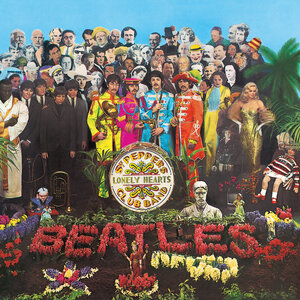
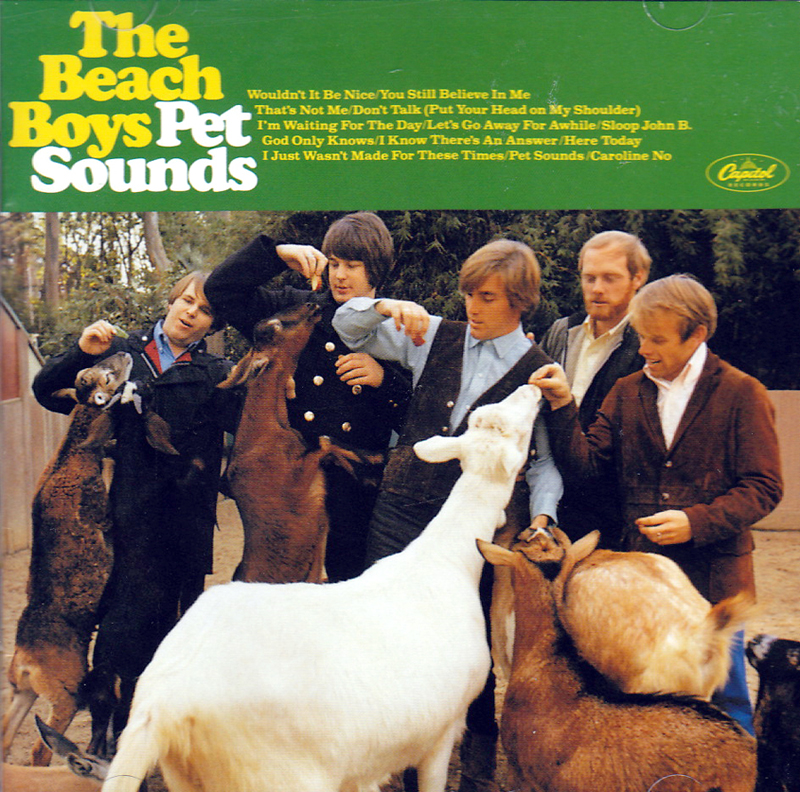
Post 3a: DUAL CLASSIC REVIEW 3: Pet Sounds - The Beach Boys and Sgt. Pepper's Lonely Hearts Club Band


Classic Review: Pet Sounds - The Beach Boys and Sgt. Pepper's Lonely Hearts Club Band - The Beatles


CLASSIC/10

CLASSIC/10

And with this review, I try something different than the standard album review. This might be a little rough, but bear with me. Here I will discuss two albums at once, as both of these masterpieces share quite a few similarities. In addition to the blindingly obvious, such as time period, genre, fame, and legacy, these were both some of the must influential and important albums in the history of modern music. I am not exaggerating here, as I am prone to do when discussing things about which I am passionate. I am not making a joke. Without these two albums, modern music does not exist. These are objectively the most important two albums in modern music. So sit down and start reading. This is the one lesson you need to have learned if you want to talk with anybody that is more than just a casual fan of music.

In case you really do not know anything about music, here is some background on these two bands. The Beatles were a band from England who began their career making excellent, low brow, catchy pop music and then started taking drugs and made the most innovative and commercially successful music in modern history. The Beach Boys were a band from California, USA who began their career making excellent, low brow, catchy pop music and then started taking drugs and made the most innovative and commercially successful music in modern music. With both of these bands, think as if One Direction, but far more popular, just released an album one day and started sounding like an even more innovative Animal Collective, but somehow still retained their popularity. And then make that even more unbelievable, as such a transformation had never happened before. For any more background, read the Wikipedia links attached to their names. Both are good reads, albeit a bit long

Due to the sheer amount of music to discuss here (twenty six songs) I am not going through each album song by song, as I usually do. This review is more about the albums as complete entities, rather than as a collection of individual songs. Basically, this review is more about history than music. It is more vital for understanding the course of modern music to view them as such, as these are the two most innovative pop albums of not only their time but of modern music. Before these albums, the album as a format was little more than an excuse to resell previously released singles at a higher price point (see previously mentioned band One Direction). Albums had the singles, and then they had a bunch of throwaway padding to back them up. From this point forth in music, every song on an album was to be flawless, representative of an artist's maximum effort each time. Before Pet Sounds, music was not art. Music did not strive to be particularly innovative, or to be held on the same intellectual plane as classical music or high art

Pet Sounds was recorded from July 12, 1965 – April 13, 1966, almost entirely by Brian Wilson, the absolutely insane but brilliant mastermind behind The Beach Boys. In 1964, Wilson, whose innate mental instabilities (which were then aggravated by absolutely depraved amounts of drug use) have become public knowledge in the years since the 60s, suffered a panic attack while on a plane flight. This particularly unnerving episode, as well as a few debilitating incidents in the years before, caused Wilson to resign for a while from touring. This sudden rush of free time allowed Wilson to focus on his production and songwriting, which were his main contributions to the band in the pre Pet Sounds era of their career. Also to note is the fact that this is when Brian Wilson started getting high like his blood was made of acid and cocaine. An actual story features Brian being convinced by his brother, Dennis, to purchase $15,000 of cocaine at one time. In 1960s money. To give a sense of perspective, calculated for inflation, $15,000 in 1965 is the equivalent of about $113,000 in 2015. Try to picture $113,000 of cocaine in one room being purchased by one of the biggest rock stars on the planet. I'd rather not. Anyways, Wilson started writing most of his music under the influence of whatever his infinite riches could purchase him. While this wrecked havoc on his already fragile mind, it worked wonders for his music and Brian Wilson began churning out more innovative and innovative music that peaked with Pet Sounds. Pet Sounds was an instant critical and commercial success in England, yet flopped in both regards in the USA. This is largely due to Capital Records completely wetting the bed in regards to marketing the album, as it was so different than anything else on the market that they had no idea how to promote it. Talk about being a victim to one's own genius. Now, as you read the next part consider how different the musical landscape of the time was from today. Music was not art. Rock n roll was dance music, not made for deep listening. Genres did not cross, and production techniques consisted of little more than recording every instrument, throwing it all together in the studio, and then mixing it a little bit so one instrument did not overpower the others. Suddenly, along comes Brian Wilson. In addition to the standard rock instruments of guitar, bass, drums, piano, voice etc., Pet Sounds features sounds from instruments/not quite instruments like the theramin, flute, harpsichord, barking dogs, Coca Cola bottles, dog whistles, and even trains. Individual songs featured entire orchestras. Genres noticeably covered on the album include psychedelia, pop, baroque, folk, jazz, avant-garde, ambient, progressive rock, classical, middle eastern/Indian, and rock. "God Only Knows" is not composed of actual, identifiable chords, has no key, and is still somehow one of the most beautiful pop songs every written. "Wouldn't It Be Nice" is arguably my favorite pop song of all time and features enough instrumentation for an entire album. There are entire essays that I could write on the album's experimenting with melody, song structure, harmony, timbre, chord voicings, and innovative production techniques, but I will not get into those. The album costed, adjusted for inflation, the equivalent of $510,000 in today's money. A price like that was unheard of at the time, and still sound slightly ridiculous. The album is also noted as one of the first concept albums, which means that it tells a story and shares a constant theme throughout. This was accomplished to a degree in the lyrics, which tell a loose story about love, but is mainly connected in the production. By creating a cohesive theme of production, Brian Wilson managed to create a concept album through his instrumentation, a feat which has only been accomplished by a few artists since.

A little later a little band known as The Beatles decided to stop touring. Their massive popularity had caused their shows to be too loud, and the band could not hear themselves play on stage, This had caused their playing skills to become sloppy, which embarrassed the band. In addition, they were hugely controversial, which had gotten to the point where it endangered the band when they were traveling. When in Japan, a battalion of 35,000 police officers were assigned to protect the band from fans. This sudden rush of free time led to the band separating for seven weeks in order to pursue personal interests and find inspiration in their own ways. It is here that Paul McCartney, the Brian Wilson of sorts for The Beatles, developed the concept of a fictional band decided to write an album from the perspective of this fictional band. Inspired by Pet Sounds, which was actually heavily inspired by an earlier Beatles record, Rubber Soul, Paul set out to write an equal to Pet Sounds (his words not mine) in both scale, innovation, and skill. McCartney's ambition, as well as a literally limitless studio budget, allowed McCartney/producer George Martin to not just push the limits of production as established by Wilson in the year prior, but to take them and break them in half over his knee, like Bane does to Batman in The Dark Knight Rises. A song not included on the album even featured one version of the song played on top of another. The Beatles recorded a sad version of the song and a happy version and layered them to create a song. If that doesn't sound particularly innovative to you, take my word for it. That is some next level stuff. 700 hours of hard work later, Sgt. Pepper's was finished. Unlike Pet Sounds, this album took no time to receive its glory. The album was immediately a commercial success and was hailed as an instant classic by nearly all critics. 

A large part of the reason why I chose to review these records together is because they were directly related, and made by bands who were directly related. The bands listened to each other's music, and regularly stole ideas from one another. The first time McCartney heard "God Only Knows" he broke down crying, and still maintains that it causes him to lost control of his emotions when he hears it. I have heard unconfirmed stories that the first time Brian Wilson heard "Strawberry Fields Forever" he attempted to ram his car into a tree, because the song had accomplished everything he was living to do in his music. Both albums were directly influenced by the work of the other band, and openly so. Both displayed unparalleled ambition and innovation, and are landmark records of their time. Both were also instrumental in the development of music and culture as a whole. The Beatles especially are seen as primary influences of culture and music, but The Beach Boys have seen their fair share of credit, especially in modern musical movements and recent fixations on pop over other genres. 

I am of the opinion that nearly any album released since the mid 1960s owes some sort of debt to these two albums. Go ahead. Try it. Name an album, and I can give you a link to one of these albums. It is like finding a person's bacon number. How is black metal related to Sgt. Pepper's? Well black metal would not exist without thrash metal which was created by a few bands, one of which went by the name Megadeth. Frontman of Megadeth, Dave Mustaine, has cited The Beatles as a large influence on his music. Experimental jazz music? The jazz undertones of Pet Sounds helped to open the public's tastes towards a jazz, leading to a more widespread acceptance of the genre. The influence of these two albums is all reaching, to say the least. 

The importance of these two albums on modern music is hard to understate. Yet, I almost feel as if I am over hyping the albums. Many who listen to them claim that they do not understand their reputation. This is due to a little something similar to the Seinfeld Is Unfunny trope. These albums have been so copied and have proven so influential that they sound derivative and unoriginal. Viewing these albums for what they are, pieces of music now over half a century old, is vital. Another fault when appreciating albums of this nature arise from the average person's inability to appreciate the subtleties of such music. TJ Jenkins from Wichita probably does not understand the brilliance of using non-diatonic chords and inverted chords in "God Only Knows". I can guarantee he never realized that when the line "God only knows what I'd be without you" is sung, the chord progression changes from the unconventional inverted thirds and non diatonic chords to the more conventional progression A–E/G#–F#m7–E, signalling an added emphasis on that line in particular. I bet he didn't notice the constantly changing key, which moves between A major and E major, or that the song ends with perpetual rounds, which was a very uncommon technique for the time. If none of that made sense to you, and it shouldn't make any sense, then you understand why some people might not fully grasp the brilliance of some of these songs.

The best advice I can possibly give to a person who has not heard these albums is to simply go out and listen, keeping in mind their age. I really do believe that even today these albums contain songs that will amaze casual and dedicated listeners, as long as one keeps an open mind. Listening to Pet Sounds and Sgt. Pepper's is almost like a rite of passage for music, similiar to reading The Republic by Plato or studying the Mona Lisa: if you keep an open mind you will probably enjoy it, and even if you don't, that is just too bad. This is a lesson that you do not choose to have. 

Monday, January 25, 2016

Unattached: SONG REVIEW: "Re-Do" - Modern Baseball


Song Review: "Re-Do" - Modern Baseball


For whatever reason, I feel like writing right now and have exhausted my default boredom activities like staring at the walls and watching paint dry. Expect these individual track reviews to occur more often around here. This is my take on the track "Re-Do" by Modern Baseball. 

Review: Emo as a genre has been given a bad name by the media and the general public, associating the term with whiny guys that wear too much make-up and write songs about problems that no emotionally competent person has enough trouble with to necessitate writing a song about them. These people failed to do their history. Emo, as a genre, is descended directly from hardcore punk in the Washington D.C area, which is about the least soft thing you can imagine. One of the most popular (and scary) 80s hardcore bands from L.A, Black Flag, was actually blacklisted by the LAPD and were watched by the law when on tour due to their destructive nature. Key members of the Emo movement played in Fugazi as well, who are regarded as one of the most essential (and not lame) hardcore/post-hardcore punk bands to have existed. On top of that, future declopers of emo started Minor Threat, who basically invented hardcore punk. Emo, or emocore, was formed by a bunch of hardcore punks who had feelings other than intense anger and frustration that they needed to get out on record. Pretty far cry from what the modern definition of emo. 

Modern Baseball, while not nearly as hardcore as the bands listed above, are nonetheless one of my favorite modern emo bands, and look about as emo as The Beach Boys. This is the opening track to their album Sports, which I consider to be one of the best modern emo records made since the genre largely discarded its hardcore punk influences for pop punk. This particular song leans more towards the pop punk side, but has lyrics regarding feeling out of place/scared of the future, and features a surprisingly good sense of humor throughout the song. 

The song opens with a short, quiet intro featuring some muted drums and a clean guitar before launching into the angry part. Singer Brendan Lukens' voice is piercing and emotive, perfect for the wordy, intelligent lyrics he delivers. There is a palpable anger in his voice when he sings "we're p*ssing away our time/'cause we're p*ssing away these beers" that makes you wonder if this chubby kid from Pennsylvania might have been the frontman of a hardcore punk band from L.A back in the day. The song swings through minor and major chord changes and the vocal melody follows the instruments, making for an incredibly catchy song that is also a ton of fun to sing along with. Don't let my talk about Black Flag and Minor Threat throw you off; even the casual pop listener could get down to this one. This is by far and away my favorite Modern Baseball song, and I strongly recommend that everybody hears it at least once. 

Friday, January 22, 2016

Post 2d: CONTEMPORARY REVIEW 2: Blackstar - David Bowie

Contemporary Review: Blackstar - David Bowie


9.1/10, Listen Immediately

Background: David Bowie is truly an artist that needs no introduction. One of the most iconic figures in modern music, Bowie is a last name that belongs in the same sentence as names like Lennon, McCartney, Jagger, Page, and Plant when discussing the greatest to ever do it. Bowie is the ultimate rock n roll chameleon, changing his style by the album. He invented that. Bowie created dozens of personas over the course of his career in order to express his ideas. He invented that. Over his career, David Bowie has helped popularize a wide range of genres, was instrumental in the sexual and homosexual revolutions in the 60s and 70s, and was a strong supporter of civil rights. He also has a few acting credits to his name, some better than others. Bowie has released over two dozen albums, and this is his final album. 

Review: There will be no hyperlinks during this review, and very few jokes. The focus here is on this album, because it truly is incredible. There is no way to discuss this album without mentioning the inevitable. This is Bowie's last album because he is dead. Died two days after its release. Turns out the man had been struggling with cancer for the past eighteen months and decided to not tell anybody. Instead, Bowie and a few close associates planned one giant last hurrah by creating this album. Try to piece together the symbolism here, because I will not spoon feed it to you. This is Bowie's first album where he is not on the cover. Instead, it is simply a black star. A central theme in Bowie's career has been space and the stars. The album's theme are pretty much exclusive to death and contemplating death and accepting death and just death in general. There is a song called "Lazarus". Lazarus is a biblical character who died and was resurrected. Hmmmm. Just put it together. The point that I will give to you is that David Bowie was an exceptional human being and a true, immaculate, incredible artist even until the very day he died and that deserves your respect whether or not you enjoy this album. The man turned his death into a work of art. Incredible. 

If this album would have been raw sewage to the ears, I would not have written this review. I would have just gone into a deep dark depression due to such an amazing artist ending his life on a failed experiment and called it a day. Fortunately, this album is incredible with and without the context of Bowie's sudden death. From the opening notes of "Blackstar" through the last tear that I know you will shed during "I Can't Give Everything Away" this is a fantastic album and couldn't have been a better send off for a legend like Bowie. 

The first thing I thought of when listening to this album was certified indie soft rock classic Kaputt by Destroyer, one of my personal favorite indie acts. It never really hit me how much Dan Bejar is influenced by Bowie. That really isn't too essential to the review, I just wanted to make a note of it.

The opening behemoth of a track, the title track, does an excellent job of setting the tone for this record: deathly, pale white, and just a little (very) weird. The first half of the song's ten minute run time is a sort of introduction, and a disturbing one at that. It is still definitely a song, but features more ominous, ritual-like singing and scattered drums than the rest of this jazzy, post punk inspired masterpiece. Suddenly a saxophone cuts in and does not leave for an extended period of time until the album is over. In nearly every song there is an ominous saxophone lurking, waiting like the saxophone of death. It seems fitting that the first instrument Bowie learned to play would be the one that dominated his final album. About halfway through the track the song completely changes to an ballad, but featuring a disturbing repetition in the background: Bowie's distorted voice yelling "I'm a black star!" It is quite chilling.

The next track, "'Tis a Pity She Was a Wh**e" is my least favorite of the album. It is by no means a bad track, it just feels slightly unnecessary in the theme of the album. The lyrics are strange and out of theme, so I will ignore them. The instrumental is quite interesting however, with some excellent post punk influenced drums and that ominous sax going wild in the background. The track builds up to an excellent conclusion and is overall still an incredible song, but the lyrical content is a bit useless.

Following that is "Lazarus" which is my second favorite song of the album. It opens with a slow, almost droning intro, and builds to an incredible finish. This is the sound of a song in no hurry, taking its time to reach the fiery conclusion. By the end, the sax has taken over the song with its sheer volume and skillful playing. Another instrument on this track that does not get enough credit is the bass guitar. The bass is masterfully played during the instrumental passages, and is actually the instrument holding the song together. The lyrics deal with death and are absolutely chilling.

After "Lazarus" are the tracks "Sue (Or in a Season of Crime" and "Girl Loves Me". Both are this albums experiments, which is saying a lot considering this is an experimental album. "Sue" is quite a heavy track, and the most post punk inspired of the album. "Girl Loves Me" features Bowie experimenting a bit with his voice and is also quite heavy. The Bowie featured on these tracks is angry, tired, and most certainly dying. His voice cracks often, intentionally and by accident, and he is mixed lower than in the previous three tracks, causing him to sound as if he is fading away. If "Blackstar" through "Lazarus" represent Bowie learning that he is dying, these tracks represent his fight to stay alive long enough to finish his album. Both are fantastic tunes, and fit well with the theme of the album.

The final two tracks are my personal favorites, the gorgeous "Dollar Days" and the heart wrenching "I Can't Give Everything Away". Both are songs that represent two sides of the same coin: acceptance. "Dollar Days" is a stunning track that is better listened to than described. "I Can't Give Everything Away" is a short (ish) pop tune, a sort of throwback to Bowie's earlier days. Make no mistake. This is not the old Bowie. This is last-track-of-his-life Bowie. The melancholy sadness is palpable in Bowie's strained voice and the instrumental's false happiness underscore the relatively happy vibe. It is a fitting end to one of the greatest careers in the history of modern music. RIP David Bowie. 

HIGHPOINTS: All of them

LOWPOINTS: None of them (maybe "'Tis A Pity..." 

Recommended Albums: Exmilitary - Death Grips, To Pimp A Butterfly - Kendrick Lamar, Kaputt - Destroyer, Unknown Pleasures - Joy Division

Thursday, January 21, 2016

Post 2c: CONTEMPORARY REVIEW 1: Emotional Mugger - Ty Segall


Contemporary Review: Emotional Mugger - Ty Segall


8.0/10, Worth Checking Out


Background: Ty Segall is a musician/bandleader/producer/songwriter from California, who has developed a reputation as the hardest working man in music, or at the least in garage rock. His solo discography is daunting on its own, not to mention the dozens of bands he has formed with other prominent musicians in order to kill whatever little free time this dude must have. Each year can expect at least one or two Ty Segall albums and then a half dozen pieces of work from his side bands. Unfortunately, not all of it is good. Not even most of it. Fairly often Segall will release something that sounds as if it was released as a joke or unfinished. However, for every few of those we get an album like the stellar Melted or the suffocatingly dark but brilliant Slaughterhouse. His music usually revolves around a heavy, fuzzed out garage rock sound that takes heavy influence from early pop groups like The Beatles and many of the early girl groups. Segall has a knack for writing strong melodies, but unfortunately many of them get buried underneath his walls of sound or his intentionally awful production. 

Review: Well, this album is certainly a Ty Segall album. There is no doubting that. All of his trademarks are here. Yet, this is another level of Ty Segall. The normally fuzzy guitars have turned into buzzsaws, tearing away at the fabric holding the songs together. The drums border on free form, and are generally used to generate as much chaos as possible. The bass is also fuzzed out, keeping steady time in the midst of the hell around it. The vocals are unlike anything else Segall has ever done. Each song's lyrics and vocal performances feel as if Segall is attempting to set his personal record in weirdness. Somebody has certainly been listening to some Frank Zappa. This is Slaughterhouse era Ty Segall for certain, but evolved into something much more twisted and weird. 

The production on this album is brutally loud, especially the guitar and drums. Both of these instruments are mixed to ear splitting volumes and its truly impressive how heavy both of them can be at times on this album. The bass, while understated, is also impressively played. Segall's vocals are mixed right in the upper middle of the album, so that they can be heard, but still sound as if they are behind the walls of sound created by the dozens of guitars throw into each song. Segall sings through a vocoder on most tracks, which is nothing new for the dude. Somehow, the production is actually surprisingly clear here. All the fuzz is deceiving, but when you actually listen to it each instrument can be heard playing its respective part and the compression doesn't completely sacrifice detail for loudness. Even my beloved Slaughterhouse suffers from a bit of underproduction, the hazard of creating a record so evil. 

For all its sinister darkness, this album still maintains Segall's love for beach bum chic melodies. Many of these songs, melodically, sound like modern interpretations of surf songs. Unfortunately, a few songs here run through their melodies dozens of times without variation, and thus run them straight into the ground. On one hand, the maniacal repetition of lines delivered with the same smiling lunacy as the doll featured on the album cover is so disturbing that it is endearing (to somebody able to appreciate pure aggression), it usually does not make for a great casual listening song. 

Overall, this is the type of album that will be entertaining for the next few weeks, and then will be relegated to a zone where it is only listened to in a certain mood. It is certainly a great album, but it will not have any influence. It will not sell well. It will not make any end of the year lists. Still, it is a great effort from Ty Segall and has me eagerly anticipating his next album. I just certainly hope he doesn't try to make a darker album than this one. Anything darker could probably extinguish the sun. 

HIGHPOINTS: "Diversion" "Baby Big Man" "Candy Sam" "Mandy Cream" 

LOWPOINTS: "W.U.O.T.U.S"

Recommended albums: Slaughterhouse - Ty Segall Band, Here and Nowhere Else - Cloud Nothings, Fun House - The Stooges, Damaged - Black Flag, Teenage Hate or Grown Up, F***ed Up - The Reatards

Post 2b: MODERN CLASSIC REVIEW 2: Merriweather Post Pavilion - Animal Collective

Modern Classic ReviewMerriweather Post Pavilion - Animal Collective


9.8/10

Background: Animal Collective is an experimental/psychedelic pop group from Baltimore, Maryland that has been releasing music since 1999 but did not really hit their stride (that joke was a reach) until the mid 2000s. AnCo is arguably the most lauded indie act of this generation, although there is a lot of competition for that. They are Pitchfork approved, Metacritic approved, Consequence of Sound approved, everybody approved. The only people who ever negatively rated the classic AnCo albums (MPP, Strawberry Jam, Sung Tongs, Feels, etc) either didn't understand it, were behind the curve, or were looking for attention. Animal Collective is constantly pushing the boundaries of pop music, incorporating influences as diverse as noise, psychedelia, folk, electronic, and more. Their releases have been consistently inconsistent, as they switch genres by the album. Yet, though all their weirdness, one thing has remained constant in their music: a strong ear for pop hooks. Their songs may be weird, abrasive, trippy, and odd yet nearly all of them feature immaculate songwriting and are incredibly catchy. MPP is the group's poppiest effort to date, as well as their most popular and influential.

Review: I suppose the most accurate comparison that can be made for the album, and one that has been made more than a few times, is to call this album the modern Pet Sounds. I think this is quite an apt comparison in terms of innovation and vocal technique, but obviously not in terms of literal instrumental sound comparison. In that regard perhaps Veckatimest - Grizzly Bear or Shields - Grizzly Bear (I am a big Grizzly Bear fan if you couldn't tell) is more of a literal comparison. The experimental element of this album is quite present, although it is diminished from the folksy and downright weird Sung Tongs or this album's less-poppy-more-experimental-but-still-poppy predecessor Strawberry Jam. This is still a fairly easy album to listen to, despite AnCo's completely undeserved reputation for being a "difficult band." Truly appreciating some of the instrumentals, time signatures, and song structures might be difficult for the average listener, but the vocal melodies remain easy and heavily Beach Boys inspired. Go learn how to enjoy Death Grips or Merzbow (this album is literally just static). Maybe a little free form jazz or some extreme metal a la Emperor or Napalm Death (no link needed). Or maybe the thirty five minute songs of Swans. Fun fact: early Swans performances were so loud that police would have to carry off audience members who were dizzy and vomiting due to the sound, and lead singer Michael Gira would regularly cough up blood and break ribs during the show due to the combination of the sound and getting hit by audience members. Those guys are strange. AnCo sounds like a commercial jingle next to those guys. If you can compare an artist to the Beach Boys, they are not a difficult proposition. Despite its poppiness it is still quite a strange album, filled with psychedelic and overwhelming synths. At the same time however, there is a beauty to the walls of noise that are featured heavily on this album, one that does not take much of an acquired taste to appreciate.

To break this album down track by track in the manner I usually do would be completely pointless for this album. Even though I usually count this as a negative for most albums, anything I could write about one song here would also apply to the song following it. They all feature watery, noisy synths that threaten to drown out the vocals (shoegaze, anybody?). They all feature slightly off kilter rhythms and drumming. The vocal melody on every song is catchy, and the background vocals are all Beach Boy-esque. The lyrics are all slightly cryptic, minus maybe "Bluish", and are generally quite happy. Instead, I will just point out the moments that stand out to me.

My favorite track on the album is without a doubt "Bluish" and I do not care one bit about all the objective journalism rules I am breaking by picking a favorite song. "Bluish" is easily one of the best pop songs ever written, and by ever I mean including the entire discographies of The Beatles, The Beach Boys, and Michael Jackson.  "Bluish" features a sample at the beginning that almost makes the song sound as if it is underwater, and then suddenly the sun comes up and rays of light shine into the dark of the ocean. The vocals, although beautiful on the whole album, are particularly gorgeous and catchy. The lyrics, which are usually not a focus for AnCo, are quite literal and truly incredible. Simply put, this is a beautiful song. The lyrics are beautiful. The melody is beautiful. The instrumental is beautiful. Beautiful, beautiful, beautiful.

Another noteworthy track is "My Girls". This was the big single off the album, the one that charted the highest, the one that won all the awards. The big fish. While I do not think it compares to "Bluish" I do think it is an excellent song. The vocal melody is catchier than a cold, and the song builds and falls in a quite spectacular way. The drums are particularly important in this track, as they essentially dictate the pace of the song throughout. The song is quite interesting lyrically, describing a desire to live simply and to live for love rather than material gain, a desire to own a house and own a place to live and use it to protect the ones you love. It's a beautiful message, albeit one that is delivered in a fairly strange manner.

Some other incredible moments on an album filled with them include the explosion of synthesizers halfway through "In The Flowers" and the proceeding second half of the track, the harmonies of "Summertime Clothes" and how incredibly complicated some of them are, the melody of the chorus on "Taste", the gorgeous ballad that is "No More Runnin", and just how scarily well this album is described by it's cover. The optical illusion on the cover perfectly fits the swirling, flowing music that it contains. Good call on that cover AnCo.

This album's influence on modern pop music is quite significant, although subtle. There is no other group quite like Animal Collective, and I can't name a group off the top of my head where I write them off as an AnCo ripoff. Yet there are subtleties that can be heard everywhere. Groups/artists that owe a debt to Animal Collective include indie juggernauts such as Ariel Pink, Unknown Mortal Orchestra, Black Moth Super Rainbow, Deerhunter, Toro y Moi, Neon Indian, Yeasayer, Foster the People, Hot Chip, LCD Soundsystem, Fleet Foxes, Dirty Projectors, and even the mighty Arcade Fire (links to show the level/quality of band that call Animal Collective an influence either directly or indirectly) can thank MPP and Animal Collective for expanding what is palatable for the modern indie consuming public as well as ideas in regards to structure, feel, and melody.

All in all, there is no doubt in my mind that Merriweather Post Pavilion is a modern classic, a landmark album of the 2000s. It has the critical acclaim, it has the popularity, it has the influence, it has the experimentation, it has the reputation needed for an album to be considered a modern classic, and in time a classic album. There is no debate. MPP = modern classic.

HIGHPOINTS: EVERY POINT

LOWPOINTS: NONE TO BE FOUND

Recommended albums: Lonerism - Tame Impala, Veckatimest - Grizzly Bear, any of the AnCo members' solo albums.

Post 2a: CLASSIC REVIEW: My Beautiful Dark Twisted Fantasy - Kanye West

Classic Review: My Beautiful Dark Twisted Fantasy - Kanye West


CLASSIC/10

Background: If you are the type of person that takes issue when writers refer to artists by their first name, just stop reading here. Kanye is a household name, and I guarantee he's the only Kanye you know. You know who I'm talking about when I refer to him as Kanye. That's the man's name. Deal with it. Anyways. Kanye West is an American rapper/singer/songwriter/producer/multi instrumentalist/fashion designer/record label president, and philanthropist. He began his career as a producer for stars such as Jay Z and Ludacris. West's early production featured samples taken from classic soul records, but sped up to chipmunk pitches and laid over easy going beats. West earned a reputation as a perfectionist, which showed up quite apparently in his meticulously produced songs. West eventually branched out into his own rapping career and overcame the public perception that producers couldn't rap with his debut album, the classic The College Dropout. This album, as well as the CRIMINALLY underrated and superior followup Late Registration, featured what would be known as the classic Kanye sound, with every song taking its base in a repeated vocal sample. The lyrics also turned away from what was conventional at the time for rap music, which was rapping about gangster stuff and general thuggery (possibly NSFW). Kanye's lyrics had their fair share of bragging, but also featured moments of insecurity and introspection that revealed his ego was simply a coping mechanism for the fight West felt on the inside. The next album, Graduation, was a slight downturn in quality from the the first two albums, in my opinion, and featured Kanye's classic sound readjusted to fit the stadium setting. These songs were bigger, louder, more dynamic, and somehow even more incredibly well produced. They took influence from EDM, classic rock, and even pop/soft rock and were even more popular than his previous works. Shortly after this, West's mother died unexpectedly after complications resulting from breast reduction surgery. The subject of many of his songs, the death of his mother devastated West. Shortly after that, Kanye and his fiance divorced. This also took a strong emotional toll on West. Kanye responded with the sleeper 808s & Heartbreaks, which was West's first album to receive any "negative" critical response. 808s featured almost no rapping and rather saw West singing in a mechanical, autotuned voice. West used the technology to augment his already dejected vocals and give the album an incredibly sad and personal feel. It would later prove to be vastly influential in the years after its release, but at the time it was the low point of Ye's career. Kanye followed that album up with the Taylor Swift incident and a canceled tour. West was possibly the most hated man in popular culture, had his first mixed critical reception, and was at the low point of his career. The man who had once been the most successful hip hop artist in the world was watching his world quickly rush away from him, and responded to his sadness in the only way he knew how. Just as how Kanye's ego and public antics served as a way to deal with his insecurities, Kanye released this album just to show the world what he could do when cornered. West flew himself to Hawaii and took six months to work with a machine-like focus. Engineers were kept on the boards nearly twenty-four hours a day, with guests from all walks of music flying into Hawaii to help assist with the album's creation. West slept in short increments and worked his featured artists the same, demanding that they re-write their verses until they were exactly how West envisioned them. Individual songs took thousands of hours to perfect, and the writing credits on this album are simply astounding. Finally, in November 2010, West released what would become his comeback album, as well as the most critically acclaimed album of the past decade.

Review: Now, I am fully aware that nobody reads my reviews. They skim the posts just enough to have something on which to base their comments so they can get their grade during the completion check and that's it. I don't expect people to read this but as I write I like to imagine that I am writing to hundreds of thousands of readers who will take time out of their lives to discuss my writings in the comment section. Just as every kid plays air guitar in front of the mirror and imagines a stadium before him or how every teenager likes to pretend that his last shot before heading inside for dinner is a championship winning buzzer beater, I like to pretend that a few people read my stupid little blog. I can imagine that in my fantasy if I was writing and people actually cared, there would be considerable outcry that I am labeling an album from 2010 as a classic. My previous modern classic is actually older than this classic. However, there is a major difference. Deerhunter is not Kanye West. Nobody is Kanye West, for that matter. For all its brilliance, nobody will be talking about Halcyon Digest in fifteen years. In fifteen years people will be sick of My Beautiful Dark Twisted Fantasy because it is still discussed with such frequency. It is an album fully deserving of its praise, so monumental in its own existence that it forces itself to be considered an instant classic. MBDTF is not a perfect album by any means, yet any score other than a 10/10 just feels inadequate. To not call it a classic is not fitting for an album of this scope and grandeur.

Now, it would have been very easy for West to kick the listener's teeth in and open the album with "Power". Given his position in life, it would have been all too simple to jump out of the gate aiming for the listener's (ear) throat. Yet West shows the album's only real moment of restraint, devoid of decadence and excess of emotion and sound. "Dark Fantasy," the album's opener, begins with Nicki Minaj putting on a British accent for a brief narration, which leads into the aforementioned decadence with a full choir singing "Could we get much higher?" It is ironic that these lyrics open the album, as West had never been lower in his career. Yet, in West's mind, he is never down. The song then swaggers into its first beat, co-produced by the Wu Tang Clan's RZA. West sounds as confident as ever, yet still sounds as if he is warming up. His raps are clever, and his flow is slick as can be, yet he is still just jogging. The real star of this song is the production, in which RZA delivers his best beat since the early days of the Wu. The chorus then ends the song with the same refrain that begins. Immediately the listener is given a taste of what this album will represent: West is using decadence to compensate for his insecurity, and, unbeknownst to the listener, his maximalism is still relatively subdued for the time being.

If "Dark Fantasy" was West warming up, the next track "Gorgeous" is West hitting a full sprint (yes, that is the actual race after the previous video of Bolt warming up). West throws down the best bars of his career, all the while tackling topics like as racial inequality and commercialism. His lyrics have rarely before or since been more clever and well written. Throughout Kanye's career he has faced criticism for his rapping, which has typically been regarded as second rate when compared to his production and songwriting. "Gorgeous" is usually mentioned as the song that proved West could rap with the best of them. RZA jumps on the back end of the track and delivers a stellar verse yet is still out-rapped by West. The idea that Kanye West would one day outrap RZA on a track was unfathomable at one point in hip hop history, yet on "Gorgeous" it happens. The song unfolds over a guitar led beat, with subtle drums and piano in the background. Kid Cudi delivers an excellent hook (my favorite of his career), and I still wish for the days before Cudi completely lost his marbles when I hear it.

You know that teeth kicking I mentioned earlier? Here is where it shows up. The third track is the aforementioned "Power." That full sprint from "Gorgeous" is maintained, but now West is running downhill. With the wind behind his back. In nicer shoes. Yeah, that fast. Nobody really gets excited by this song any more because of its popularity, but there is a reason for that. West is at his most confident (arrogant?) here, and over the most bombastic beat of his career up until this point. West's lyrics address his fame and egoistic personality. West raps with such conviction here that it is hard to do anything but give him a pass for his eccentricity. Lines like "I embody every characteristic of the egotistic / He knows, he's so, f***ing gifted" prove that West has a sense of self awareness about his attitude yet chooses to maintain it anyways. In addition to his confidence, however, is a sense of paranoia. West almost sounds as if he is convincing himself, in addition to us, of his greatness. Given the low point he was at, it almost seems as if Kanye may have needed a confidence boost and this song is serving as just that. Perhaps West chooses to go so hard here to prove to himself that he still has it. The song takes a sample from "21st Century Schizoid Man" by Emerson, Lake, and Palmer, a song about a man with conflicting morals and thoughts. West paints himself as this "Schizoid Man" with his alternating rushes of confidence and paranoia, perfectionism and insecurity. West feels the pressure of his fame, of his ego, of his reputation, and of his personal life and again turns to braggadocio in order to fool himself into confidence. As mentioned, the beat here is of immense scale, with booming bass and drums to accentuate the giant guitar stabs and the chanting. West's maximalism is showing quite strongly and the song is all the much better for it.

Next up is "All of the Lights (Interlude)" and "All of the Lights". The interlude takes the melody of the main track and translates it to a beautiful piano and string led interlude. This morphs into "All of the Lights." The weird thing about "All of the Lights" is that it is the worst, and simultaneously one of the best, songs on the album. On one hand, the drums sound like they were mixed by a cokehead during a particularly fervant trip. On the other hand, Sir Elton John is featured on the track. On another hand, Fergie has a god-awful little interlude about three minutes in about doing cocaine and being broke. On the other, other hand Rihanna's hooks do more than compensate for Fergie. Kid Cudi drops the ball here and comes off as annoying. The horns are excellent. There is plenty to hate about this song, yet I can't bring myself to dislike it.

Next up is the album's middle centerpiece, "Monster". The song opens with an absolutely blood chilling intro from Bon Iver, who is just about the least scary dude ever. But, for Kanye West, Vernon (Bon Iver) bares his fangs and kicks this song off with a bang. Rick Ross then joins in with a very short verse, one that is at once completely unnecessary yet is absolutely essential to the track. The beat kicks in, full of bass, and West begins rapping, delivering one of his best, albeit conceited and downright uncomfortable, verses. Jay Z takes the next verse, and then attempts to name drop as many monsters as he knows (link has language), and then admits his primary weakness is love. Beyonce needs to step it up. Nicki Minaj then jumps into the song and basically shoves a pink high heel point into the song's face. Cycling through as many voices as she knows while alternating between mocking falsetto and maniacal growling, Nicki drops what is easily the best verse of her career up until that point and through the present as well. Anybody who doubts Minaj's skill as a rapper due to her recent questionable pop concessions (that's a nice way to say that she sold out and only releases throwaway pop now) needs to check this verse out. If it wasn't for Rick Ross' verse later in the album, there is no question that Nicki Minaj wins the prize for "most clutch verse," as I doubt anybody was expecting much from her when the song began. The song closes with a nicely produced outro, and that's it. The track is over six minutes long, yet feels barely over three due to the frantic pace of the beat and Nicki Minaj's verse.

Following "Monster" is "So Appalled," a posse cut that features five guests, including West himself, over a dramatic, string led beat. Discussing the merits of fame, West steps up to the plate first and hits a double, with a very solid but not mind blowing verse. Jay Z then reminds us why he could be considered the greatest of all time with a verse that does more than compensate for his fairly lame verse on "Monster." Funny, aggressive, bragging, emotive, and technically skilled, Jay Z is in peak form here. After another chorus, it is Pusha T's turn to rap. Considered a has-been who once ruled the game in the duo Clipse but hadn't delivered as a solo artist, Pusha hits a home run (to stick with the baseball theme.) Pusha T outraps everybody on this track, and makes it sound easy. Brimming with malice (no pun intended), Pusha spits out his words with a disturbing calm, yet keeps his teeth gritted enough to know he means business. With Pusha T, another famous old timer again delivers a peak level verse. Cyhi the Prince, who actually was not supposed to be on the track but snuck his verse on while West was sleeping, puts up the best verse of his career as well, a verse strong enough to convince Kanye to keep his addition. If you haven't noticed yet, a large part of this album's legacy is that it teased the best out of nearly all of its contributors. MBDTF sees the best verses of more than a few careers, and even forces Bon Iver out of his folksy tear stained comfort zone. The track ends with RZA repeating a few variations of the song's hook in his most obnoxious voice possible.

The next song, "Devil In a New Dress", is my personal favorite of the album. The only song not produced by Kanye West, "Dress" nonetheless features the most beautiful beat of the album. Centered around a stunning Smokey Robinson sample, West spits lyrics about his powerlessness in the hands of women, filling his verses with religious imagery and compares/contrasts the girl of his dreams and the girl using him with images of Christ and Satan, debauchery and devotion, love and lust, extravagance and uselessness, bragging and deeply seated insecurity. West ends with the question "you love me for me, could you be more phony?" Aware of his own superficiality, West states that any girl who delivers the cliche "I love you for you" to him is equally as egoistic and superficial, a flaw of having a personality such as his. This line and its host of implications could be read as a sort of thesis statement for the album. After West's second verse, the track breaks down into a guitar solo, played by Mike Dean. Featuring distorted, weeping guitars over the original beat, the jaw dropping beauty of the track is nearly overwhelming at this point. Suddenly Rick Ross jumps into the track, rapping like he has something to prove. Delivering lines like "double-headed monster with a mind of his own/Cherry red chariot, excess is just my character" and "had cyphers with Yeezy before his mouth wired/Before his jaw shattered climbin' up the Lord's ladder" Ross packs his verses with internal rhymes and alliteration like never before in his career. Ross paints a vivid image of lonely excess, ditching his usual tired lines about selling cocaine (which he never actually did) for depictions of extreme luxury and loneliness. Yet again, the best verse of an artists career is used on this album. The track cuts out suddenly and proceeds into the album's true peak, "Runaway".

The nine minute track that follows "Devil In a New Dress" needs little to no explanation. Here is a link to the song (censored). Listen, and listen well. You are listening to arguably the greatest individual song in modern hip hop. A stunning revelation of character and beautifully crafted apology, "Runaway" serves as West's apology to both Taylor Swift and the world in general. A third of the way through Pusha T absolutely murders his verse, as anything less would be criminal. Pusha T plays the the jerk West sings about and then some. I wanted to type out some of the lyrics here, but there are just too many in his verse that I would have to include. Here are the lyrics. Read them. That is all I have to say about this track.

After "Runaway" is the album's worst song. "Hell of A Life" opens with a crushingly heavy bassline which it proceeds to throw away for a fairly annoying beat and a song about lust. Not love and lust. Just lust. And porn. Lots of porn. This track is essential to the album and its themes of American excess, despite being the album's weakest track. I guess it would be passable if the chorus stole its melody from a song that wasn't Black Sabbath's "Iron Man". Seriously Kanye? "Iron Man"? Really? Anyways. Next track.

The next three tracks close out the album in a gorgeous manner. First up is the epic break up track "Blame Game." After that is a stunningly gorgeous cover of Bon Iver's "Woods" featuring the man himself. "Woods" is already a beautiful track, and Kanye does it justice.The album closes with a Gil Scott Heron spoken word piece laid over a decent beat. This serves as a brilliant three-peat to close the album.

One would think that such a brilliant album would have had some sort of influence, yet MBDTF has had very minimal direct influence in the world of rap other than setting the bar higher for everybody else in terms of production and thematic quality. My theory for this is because this is a highly individualized album about Kanye West, for Kanye West, made by Kanye West. This album serves almost as West's diary, as an internal examination of West's own psyche. We are simply visitors inside his mind, here to find things to relate to and be awed by. Themes and concepts spread through the album, such as love, lust, excess, consumerism/shallowness, arrogance as a means to cover insecurity, and hatred of ones tendency towards self love, are not so much intentional devices used to make a point as they are a product of who Kanye West is as a person. Usually when listening to an album, the listener feels as if they are taking a product designed by a musician for their consumption and that they are evaluating it based on some criteria that the person uses to judge music. With this album, I feel as if I am looking into somebody else's mind and am simply a guest in the space of their consciousness. The album is leading me through what it wants me to see, rather than I am looking through the album to find things to dissect and write about. Finding an album so intensely personal as this is rare, and I fully believe My Beautiful Dark Twisted Fantasy deserves classic status, despite its young age, because of this.

HIGHPOINTS: "Power" "Monster" "So Appalled" "Devil In a New Dress" "Runaway" "Lost In the World"


LOWPOINTS: "Hell of a Life", certain parts of "All of the Lights"

Recommended albums: Any of West's previous projects, Good Kid M.A.A.D City - Kendrick Lamar, Run The Jewels 2 - Run The Jewels, For Emma, Forever Ago - Bon Iver

Thursday, December 3, 2015

Post 1d: CONTEMPORARY REVIEW 2: Vega Intl. Night School - Neon Indian

Contemporary Review: Vega Intl. Night School - Neon Indian


8.8/10, STRONGLY RECOMMEND

Background: Neon Indian is the sole survivor of one of indie music's greatest over-hyped failures, the genre known as chillwave. What separated Neon Indian from the rest of the chillwave movement is that his music was actually good, and he could perform in a live setting with the best of them. Neon Indian is fronted by Alan Palomo, the only member of the band who actually matters. Palomo has charisma like few in the game at the moment, especially live. Disappointingly, he is neither neon nor Indian in person, but probably carries both traits at heart. Neon Indian's body of notable work includes their debut album Psychic Chasms, a fantastic album and a landmark of the chillwave experiment. That was followed up by the solid Era Extrana, which got lukewarm reviews from critics but I personally thought was just as good as his stellar debut. 
Review: Before I even talk about the music, let's take a minute to appreciate that cover. That is probably the best cover of this year. If I was playing a game where I had to pick a cover that looks exactly how the album it houses sounds, I would pick this one. It is bold, eye catching, stylish, risky, nostalgic, yet still forward thinking. Absolutely perfect. 

The album opens with a short, one minute long track titled "Hit Parade." This song is just a series of clicks and blips that lead into a bouncing groove, meant to serve as an opener as well as a flex of production muscle. It goes over well, although it is a bit shorter than I would have liked.

The next track is titled "Annie." The song features Palomo's typical falsetto vocals, but pushed higher in the mix than they have ever been. A reluctant singer at first, it is a refreshing change to hear Palomo's vocals so upfront and confident, because he truly has a great voice when it is as decipherable as it is here. The track features a slight reggae influence, especially apparent in the clicking guitar upstrokes during the verses. Already it is worth noting that Neon Indian is still taking cues from chillwave, such as synthesizers, sampling, and a fetishism of 80s synth pop, but has evolved into something entirely different. Palomo is now taking cues from modern pop, funk, soul, and most apparently nu-disco, all of which are influences that I strongly approve of. 

The next track is "Street Level" and, in my opinion, is the first time Palomo knocks it out of the park on the album. The synths are squelchy and shapeless, and the song staggers its way through its three minute run time. Palomo's vocal melody is ridiculously catchy, especially in the chorus. When the chorus hits, the song pulls itself together to sound like it might contain some semblance of organization, only to fall into a disorienting myth of synthesizers and samples again for the verse. It is a neat trick, and again, Palomo's vocal melody just works its way into your head and refuses to leave. 

Next is "Smut!" which is a largely forgettable, albeit hilarious track. I'm not going to explain the lyrics to you, but here they are. The song has again, a superbly catchy chorus and shows a humorous side to Neon Indian that is sometimes left out of his records. "Smut!" is followed by "Bozo" which is the album's second and best instrumental. "Bozo" is barely over a minute long, but features an absolutely viscous groove/beat, reminiscent of Daft Punk in the best way one can be related to them. The song is relentless and pounding, a great dance interlude for the album. 

The album hits a stride starting with "Bozo" and reaches its peak with the next song "The Glizy Hive." This is not only the finest song of the album, but it is also easily Palomo's best creation, a strong candidate for song of the year in 2015, and probably the best thing to have ever come out of chillwave. The song is infuriatingly catchy. Well produced is an understatement, with its punchy, groovy instrumental. Palomo gives his best vocal performance ever as well as his best production performance ever at the same time. The song is dancable, catchy, and satisfying in every way. There is arguably only one pop song written this year that can match it and I do not say that lightly. 

Palomo then knocks it out of the park again with "Dear Skorpio Magazine" "Slumlord" and "Slumlord Reprise." All three tracks give us more of what we expect from Neon Indian, but catchier, tighter, better produced, and more fun. Palomo again shows his sense of humor on "Dear Skorpio Magazine" while showing a more serious side on "Slumlord." Despite its heavier subject matter, "Slumlord" is a wildly fun track that is also quite catchy. Notice a common theme here? Every song here is irresistibly catchy. Palomo just knows how to write a hook and is a remarkably consistent songwriter, something we have all known for years but just now are recognizing. 

The album hits a bit of a rut with "Techno Clique" and "Baby's Eyes." Techno Clique features a strong beat that is considerably faster and more energetic than anything else here, but completely falls flat vocally. The melody is almost non existent, and the fantastic beat is only interesting for a few minutes, much short of the song's four and a half minute run time. "Baby's Eyes" is not a bad song by any means, but is not nearly as stellar as any of the other tracks either. It is Palomo's attempt at writing a ballad and it goes over well. The main limitation the track carries is it's unwieldy six and a half minute run time, which feels largely unnecessary. 

The album closes out on three high(ish) notes, starting with "C'est La Vie (Say the Casualties!)." This is the albums most fun track, and makes a run at being the album's second best until the last minute of the song which devolves into a repetition of the title that begins to get slightly grating after a while. "61 Cygni Ave" is the group's most overtly reggae influenced work. It is overall a fun track, albeit not one that particularly sticks with you. Unfortunately, reggae is not one of the genres that I listen to on my own accord, and I feel guilty deriding a reggae influenced song due to my lack of experience in the genre. The album then closes with "News from the Sun" which is the third major high point of this album. Palomo channels his inner Prince for this one. Palomo nails the voice, the inflections, the melody, and the charisma in a way that makes this song easily passable as one of Prince's better songs. A comparison to Prince is not something I just throw around, so for me to compare the skills of this relatively unknown artist to the greatest individual pop star in modern memory (sorry MJ) is a big deal. 

Overall, Alan Palomo has crafted a fantastic little record here. It is strongly nostalgic of the 1980s night life, yet is a distinctly modern sounding album. It does not serve some larger purpose or pretend to be anything other than a frighteningly catchy and fun dance album. Every song on here sounds like the soundtrack to a city at night, every song sounds like it could have been "that song" that everybody gets on the dance floor for back in the 80s. This is not the kind of album that will win many awards, top anybody's end of the year lists, or be respected as highly influential or as a modern classic. It is just a fantastic album for the time being, and just like that song that makes everybody get on the floor, it will soon pass and everybody will go home, back to their boring lives. 

HIGHPOINTS: "Annie" "Bozo" "Street Level" "The Glitzy Hive" "Slumlord" "C'est La Vie" "News From the Sun"

LOWPOINTS: "Techno Clique" 

Recommended albums: Multi Love - Unknown Mortal Orchestra (this album's competition for my personal pop album of the year) Currents - Tame Impala,  Purple Rain - Prince, Gossamer - Passion Pit